

Nimaca is today one of the most influential Colombian producers of his generation. His unique approach to developing his own musical ideas and his involvement in projects with global artists have made his name synonymous with innovation within reggaeton and contemporary urban music.
At 25, Nicolás Martínez, known professionally as Nimaca, has become one of the most influential creative minds of the new wave of Latin producers. A member of the collective The Ozakis, along with Cuzzaid and Frankking, he has established himself as a key figure in shaping the contemporary urban sound, collaborating with artists such as Bad Bunny, Eladio Carrión, Feid, Quevedo, Pitbull, Noriel, De La Ghetto, and CNCO, among others.
Behind his meteoric rise lies a story of discipline, vision, and a relentless pursuit of a unique style and a sound instantly recognizable. What began as a childhood dream of becoming a DJ, inspired by David Guetta, has blossomed into an international career that now inspires an emerging generation of producers in Colombia and beyond.
Nimaca’s first encounter with music was almost accidental. At eleven years old, seeing a DJ perform live for the first time, he knew he wanted to dedicate himself to creating sonic worlds. He began studying DJing and, shortly after, music production. His training was hybrid: technical, disciplined, and empirical all at once. He spent entire afternoons studying at home, practicing in Ableton Live, and watching tutorials, complementing it all with formal training at specialized institutions.
This combination—structured education alongside radical self-exploration—is, according to him, what allows him to have a deep understanding of musical architecture, an advantage uncommon among most emerging producers.

Although he had been working professionally since 2019, initially with Los Brokix alongside Argüello, one event changed his life forever: a message at three in the morning.
After uploading a TikTok video showcasing a snippet of his work, he received a direct message from Feid requesting music. The message surprised him while he was with friends in a studio helping other young producers. The impact was immediate: “I went to the profile, saw the green photo, and thought: no way. Everything went crazy. I don’t remember what my friends said, but the happiness was indescribable.”
That contact opened a door that never closed again: within weeks he was in Medellín working with the creative team at Ferxxo, and months later, his name was already circulating in high-profile studios.
The Leap to Reggaeton’s Elite: Bad Bunny, Eladio Carrión, and Quevedo:
One of the most important milestones came when Bad Bunny selected “Veldá,” a song created by The Ozakis, for his album “Nadie Sabe Lo Que Va a Pasar Mañana” (Nobody Knows What’s Going to Happen Tomorrow), a project recognized with two Latin Grammys and a pivotal piece in global urban music.
The story behind the song demonstrates the trio’s high standards and vision: Nimaca created the first version of the track in December 2023 and then sent it to Cuzzaid and Frankking, who restructured it while working from Spain.
The song traveled, transformed, and was polished for a whole year until it was finally selected for the album. For Nimaca, hearing his beat for the first time accompanied by Bad Bunny’s vocals was “the moment everything made sense.” That same period also solidified their presence in high-impact projects, including three songs on Eladio Carrión’s Don KBRN (“El reggaetón del disco”, “Özil”, and “Romeo y Julieta”) and the collaboration “Duro” with Quevedo, which strengthened their entry into the European market.
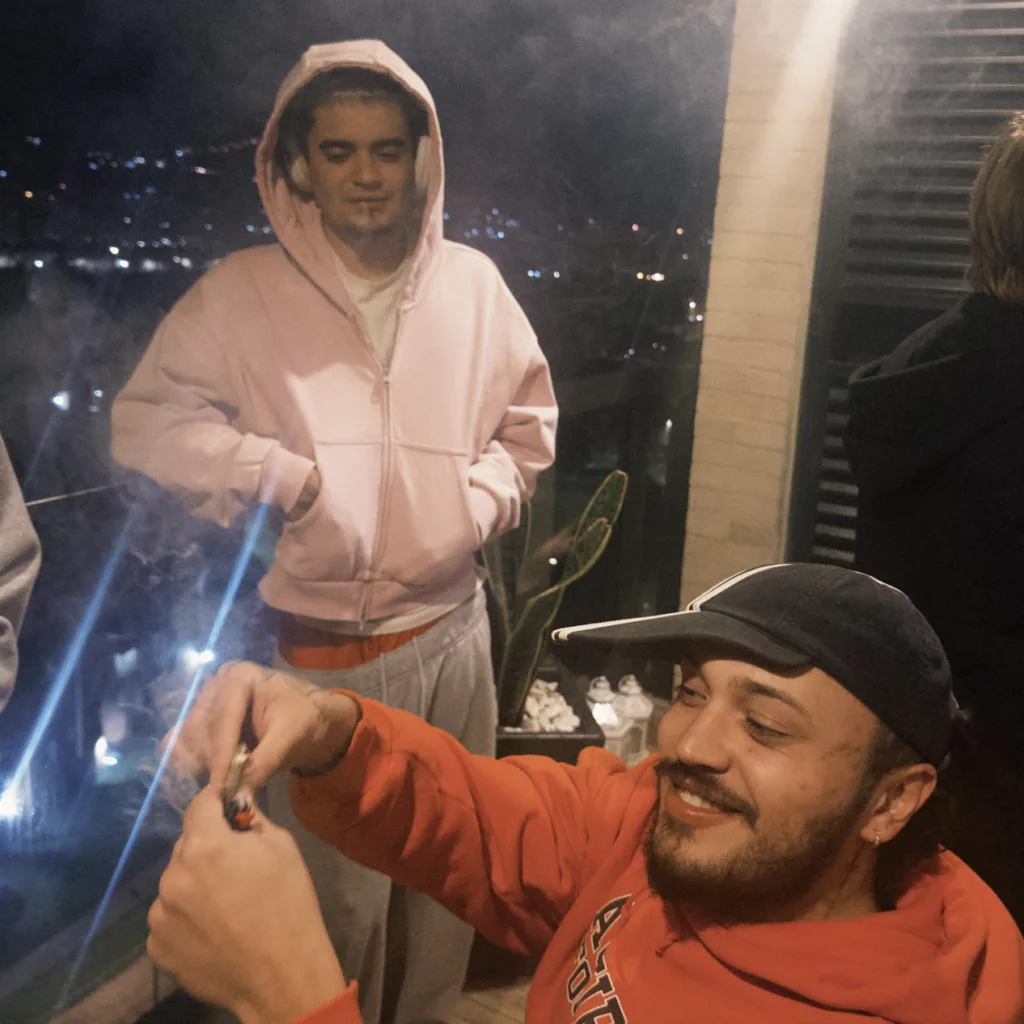
The Ozakis: Three Minds, One Language
What began as a connection between two producers from Bogotá who met online ended up becoming The Ozakis, one of the most disruptive creative collectives in contemporary Latin music. Officially formed in 2023, the trio brings together three distinct universes: Nimaca, from Bogotá, with his obsessive vision of color and sound architecture; Cuzzaid, also from Bogotá, with whom he shares an artistic chemistry that was born even before they met in person; and Frankking, a British producer whose sensibility fits naturally into the DNA of reggaeton.
Together they have become a benchmark for new generations, demonstrating that Colombian talent can forge its own path without replicating external models.
“We want producers to have status too, to feel cool, to have an identity. Like the Neptunes in their time. Like all those who changed the perception of the creative role.”Although Nimaca considers Bogotá his home and the place he always returns to create, Medellín has been a teacher for him. “Bogotá is home. Medellín is home.”