
A documentary chronicling the origins of rave culture and the UK’s free party movement will make its worldwide virtual premiere this Friday (30th May).
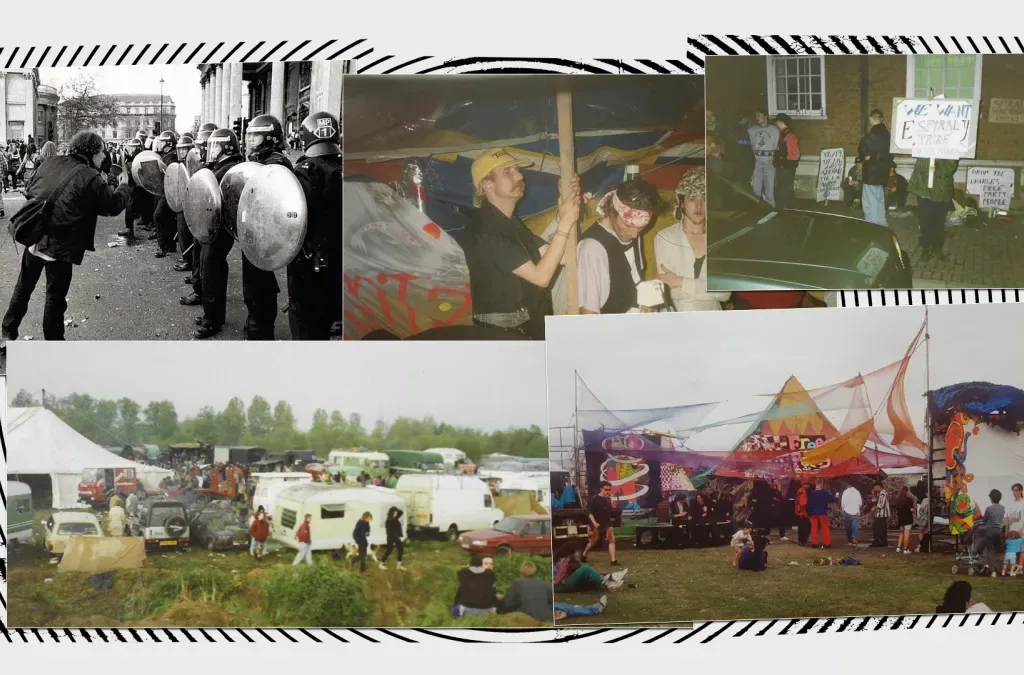
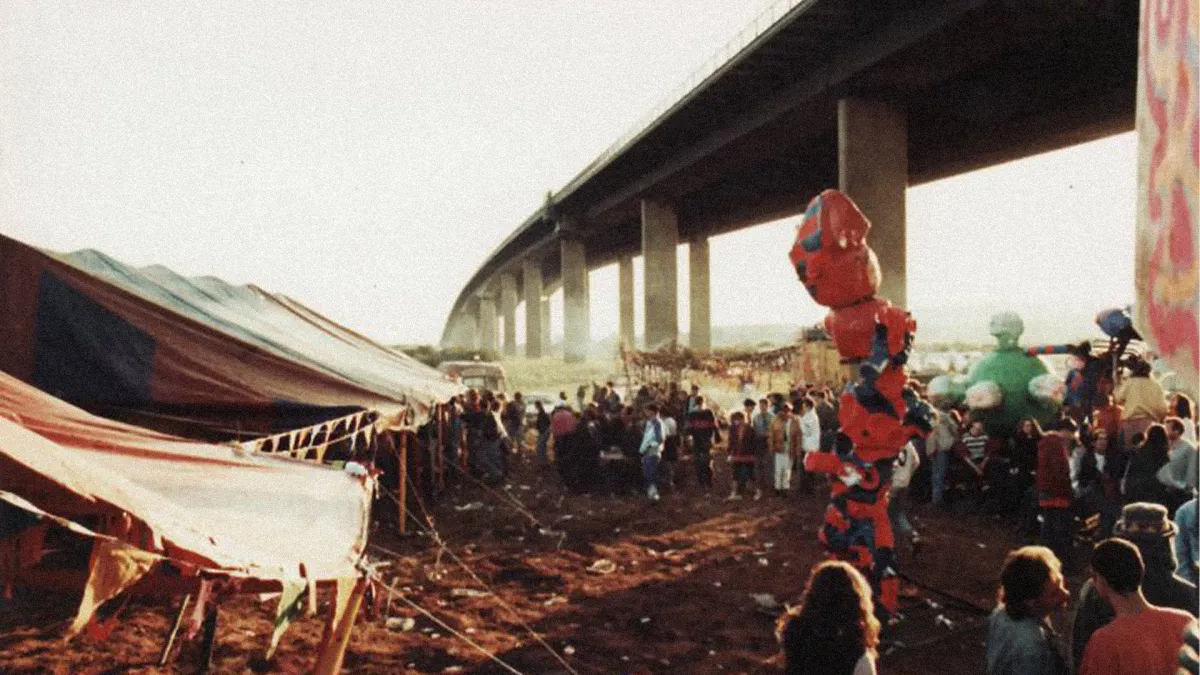
The work of filmmaker Aaron Trinder, Free Party: A Folk History commemorates the 33rd anniversary of the legendary week-long Castlemorton rave and 40 years since the 1985 Battle of the Beanfield, when around 1,300 officers from Wiltshire Police launched at approximately 600 new age travellers with truncheons to prevent them setting up the Stonehenge Free Festival, which resulted in dozens of injuries, including women and children.
Bound together by an era-defining soundtrack, these pivotal events are crucial to the film’s narrative, which places the radical, counter-cultural free party movement within its socio-political context: the Public Order Act 1986, Margaret Thatcher’s last days in power and the subsequent legal changes and crackdowns that followed in the wake of the 1992 Castlemorton rave.
Composed of news clips, “never-before-seen” archival footage and first-hand accounts from key free party collectives such as West London-originating Spiral Tribe, Circus Warp, and Nottingham’s DiY Sound System, as well as DJs and other contributors, Free Party: A Folk History builds a timeline from the peak of acid house in 1989 and the explosion of free parties in 1991 through to the large-scale protests against the arrival of the anti-rave Criminal Justice Bill in 1994. The film later delves into the European teknival scene before zipping forward to the present day.
Notably, Free Party: A Folk History celebrates the catalytic coming together of the new age traveller community and the urban ravers at Glastonbury’s erstwhile travellers’ field in 1990, a meeting that filmmaker Aaron Trinder describes as a “kind of marriage made in some sort of glorious rave heaven”.Initially envisioned as a short film documenting Spiral Tribe’s infamous week-long ‘90/‘91 New Year’s party at Camden’s then-abandoned Roundhouse — of which Trinder was an attendee — it struck him that no one had yet captured the whole story of the free party movement. “One interview led to another. And I just found myself with enough material, entering lockdown to sort of shape a film,” he told DJ Mag.