
The I Color Radio team in Latin America, coordinated from our facilities in Atlanta, Georgia, has spent the last few months compiling a list of the 10 most important theaters on the continent. It’s a fascinating list that takes us on a journey from Mexico to Argentina, passing through the powerful Brazil and the rising stars of Colombia and Chile.
The experience of music on a CD, streaming, on the radio, or in a stadium is remarkably different from what you might experience in a theater or in an intimate venue. It’s a difficult experience to describe, and the effect these experiences have on the audience is forever etched in the memory.
Architecture, acoustics, engineering, theater design, and the artists themselves have come together to create true works of art in the live music industry that have allowed us to appreciate music in all its splendor. The audience and tastes of fans are so diverse that the sky’s the limit.
Unlike any other type of venue, you can enjoy the art of music in all its splendor and intimacy. Forget long lines to get in, forget monstrous logistics, and inconveniences. Enjoy a good bathroom, secure, covered parking, and also access to a good restaurant and a drink in an exciting bar. These are the advantages of a theater, and if you’re a lover of Latin music, rock, folk, opera, chamber music, and symphony, then you’ve come to the right place: Theaters are the best alternative.
In Latin America, there are numerous concert halls created with their own unique personality. The greatest exponents of world music have graced their stages, and that’s why we’ve created this list of the ten most impressive theaters in the region for 2026. This year’s list includes legendary theaters and new projects that are packed with music lovers looking to enjoy their atmospheres on a level far superior to that of a huge stadium.
The 10 best theaters and concert halls in Latin America 2026:
1. USC Arena, Cali, Colombia
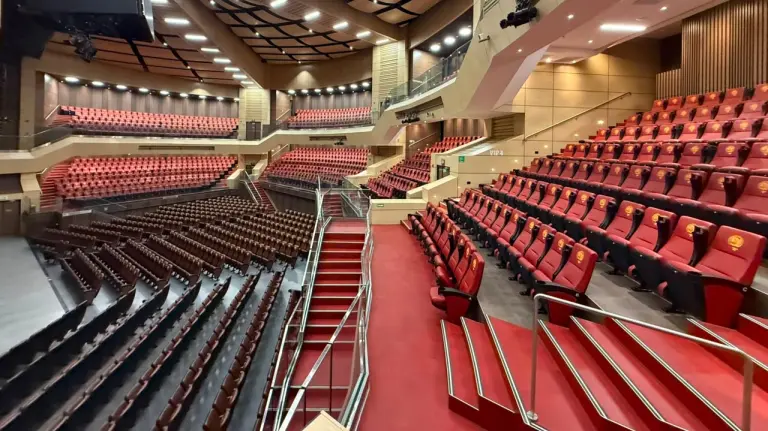
Surprisingly, this Colombian venue has jumped to the top of the list this year thanks to the spectacular boom in the live music industry in the South American country. But beyond that, the USC Arena is a prime example of modern architecture for the world, a fact demonstrated by its ability to withstand the recent 7.4 magnitude earthquake that struck the city.
With a capacity for more than 2,200 people, 800 covered parking spaces, and a strategic location, this venue combines cutting-edge technology with accessibility. The lighting and sound system, cinema-style seating, and impressive air conditioning complete the ideal setting for all types of events.
The USC Arena was chosen on August 7 as the venue for President Abelardo de la Espriella’s inauguration. The venue hosted members of the Colombian Congress and guests at the ceremony, including King Felipe VI of Spain and President Milei of Argentina. Abelardo de la Espriella’s presidential inauguration in Cali was historic because it marked the first time in Colombia’s republican history that a president assumed office outside of Bogotá.
This year, the venue will once again be one of the main stages of the world-famous Cali Fair, despite the devastating earthquake that struck the city on August 10th. Fortunately, the arena’s structure was undamaged. According to its executive director, Carlos Fernández, the USC Arena will feature performances by some of the world’s most important tropical music artists.
The USC Arena also has a bar, restaurant, outdoor areas for relaxing before and during events, and elevators to the dressing rooms. It was inaugurated in December 2024.
2. Teatro Telcel, Ciudad de México
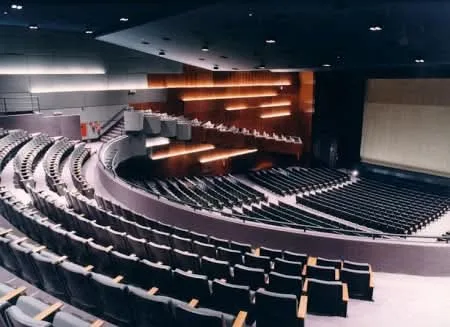
It is the most modern and well-equipped theater in Mexico City, located at Lago Zurich 245, in Polanco (in the so-called “Slim City,” next to museums and shopping centers belonging to the same group).
Construction began in 2008, and it opened on October 17, 2013, with the premiere of “Wicked” in its first Spanish-language version. It was conceived by Ocesa and producer Morris Gilbert as a Broadway-level venue, comparable to theaters like the Minskoff in New York or the Coliseum in London.
The conceptual design was by Spanish architect Antón García Abril (Estudio Ensamble), inspired by the composition of Aztec temples, while the auditorium and stage were designed by Mexican architect José de Arimatea Moyao. Located six stories underground, it is renowned for being the only theater in Latin America with the Constellation audio system, comprised of 270 speakers distributed throughout the auditorium, ensuring crystal-clear sound from every seat in its 1,380-1,400 seats. Furthermore, 677 seats on the lower level are mounted on hydraulic platforms that can be completely retracted, transforming the floor into a flat surface for other uses.
Since its opening, it has hosted major musicals such as Les Misérables, Chicago, The Lion King, and Anastasia, establishing itself in just over a decade as an undisputed leader in musical theater in Mexico.
3. Teatro Caupolicán, Santiago de Chile
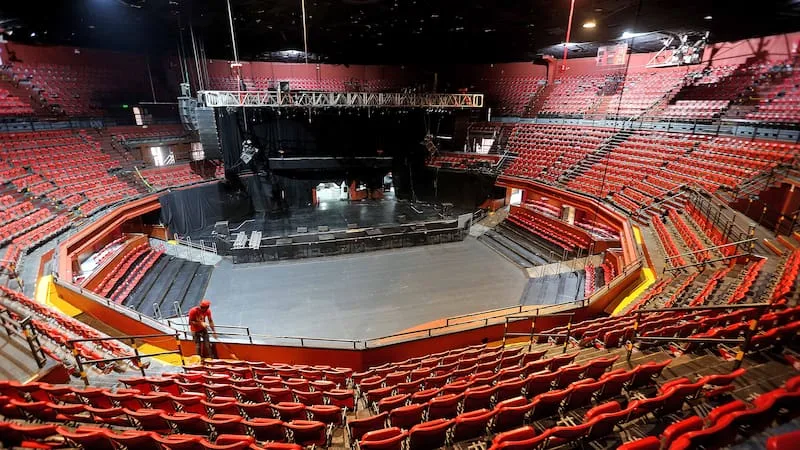
One of Santiago’s most iconic performance venues, located at 850 San Diego Street in the historic San Diego neighborhood.
It was built between 1935 and 1936, financed by the Public Employees’ Fund, with the aim of providing Santiago with a world-class performance hall. The design was by architect Alberto Cruz Eyzaguirre, featuring a neoclassical amphitheater style and a 40-meter-high dome. In its early years, it was called the Caupolicán Circus Theater and hosted operas, concerts, circus performances, and sporting events.
It has a seating capacity of 4,500 and can accommodate up to 5,400 standing.
It is not just a music venue: it has been the stage for sporting, political, and cultural events for almost 90 years. Former presidents such as Arturo Alessandri, Eduardo Frei Montalva, and Salvador Allende held rallies there, and it also hosted boxing matches featuring figures like Martín Vargas.
Its stage has hosted names like Louis Armstrong, Duke Ellington, Claudio Arrau, Lucho Gatica, Raphael, Lola Flores, Los Bunkers, Gustavo Cerati, Iron Maiden, Bob Dylan, Deep Purple, and Faith No More, among many others. Today it remains very active—currently organizing more than 120 events a year, with a schedule that mixes rock, salsa, sporting events, and large-scale shows.
4. Teatro Metropólitan, Ciudad de Mexico
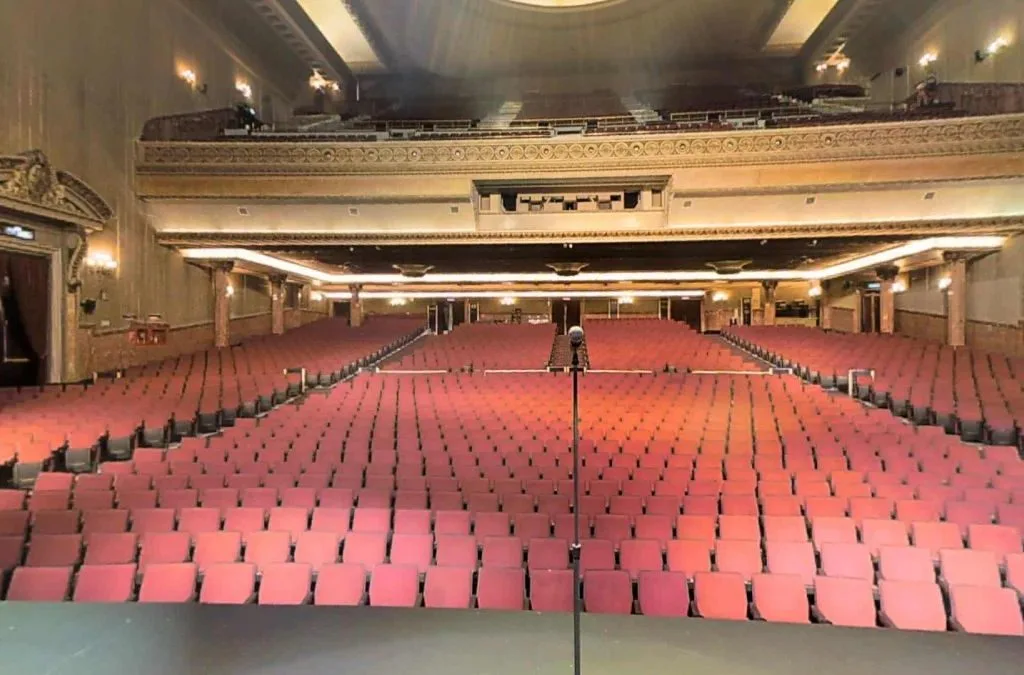
One of the most emblematic cultural venues in Mexico City’s Historic Center.
The building, with its Art Deco exterior (said to be inspired by New York’s Radio City Music Hall) and Neoclassical interior, was designed by architect Pedro Gorozpe Echeverría, with interior decoration by set designer Aurelio G. Mendoza, who directed more than 400 artisans for five months in 1942.
It witnessed the golden age of Mexican cinema, with stars like María Félix, Dolores del Río, and Pedro Armendáriz walking its halls. With the decline of the film industry, it closed in the early 1990s and remained abandoned for a time.
In 1996, it was rescued and remodeled by OCESA, which transformed it into a venue for concerts, theater, dance, and live performances. It has a capacity of 3,165 people, giving it a more intimate atmosphere than other large venues in the city. It has also hosted the Mexico City Jazz Festival and, in the 80s and 90s, the TV y Novelas Awards.
5. Vivo Rio, Río de Janeiro, Brasil
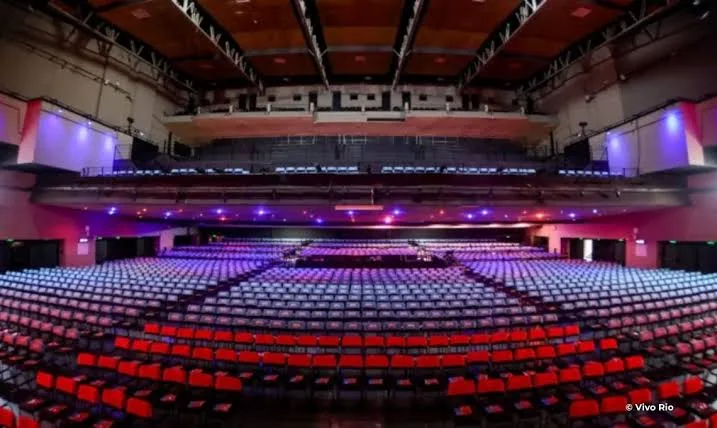
One of Rio de Janeiro’s premier concert venues, located in the Aterro do Flamengo, within the Museum of Modern Art (MAM) complex, at 85 Infante Dom Henrique Avenue.
The curious thing about this venue is that its design wasn’t originally intended for concerts: the original architectural project was conceived in the early 1950s by Affonso Eduardo Reidy, one of the pioneers of Brazilian modern architecture, as part of the MAM complex. Decades later, that project was completed as a concert hall thanks to a partnership between the Tom Brasil Group and the mobile phone operator Vivo, with an estimated investment of R$25 million.
It was inaugurated on November 10, 2006 (with part of the structure still under construction), with a concert by Gilberto Gil featuring special appearances by Maria Rita, Adriana Calcanhotto, and Sandy & Júnior.
It has a capacity of 4,000 people, distributed among the stalls, boxes, and suites, in an area of 3,000 m². Throughout its nearly 20 years, it has hosted major names in Brazilian and international music, as well as theater, dance, and award ceremonies—it is estimated to have gathered more than 2 million spectators in total. Its location, next to Santos Dumont Airport, makes it very accessible within the city.
6. Teatro Gran Rex, Buenos Aires
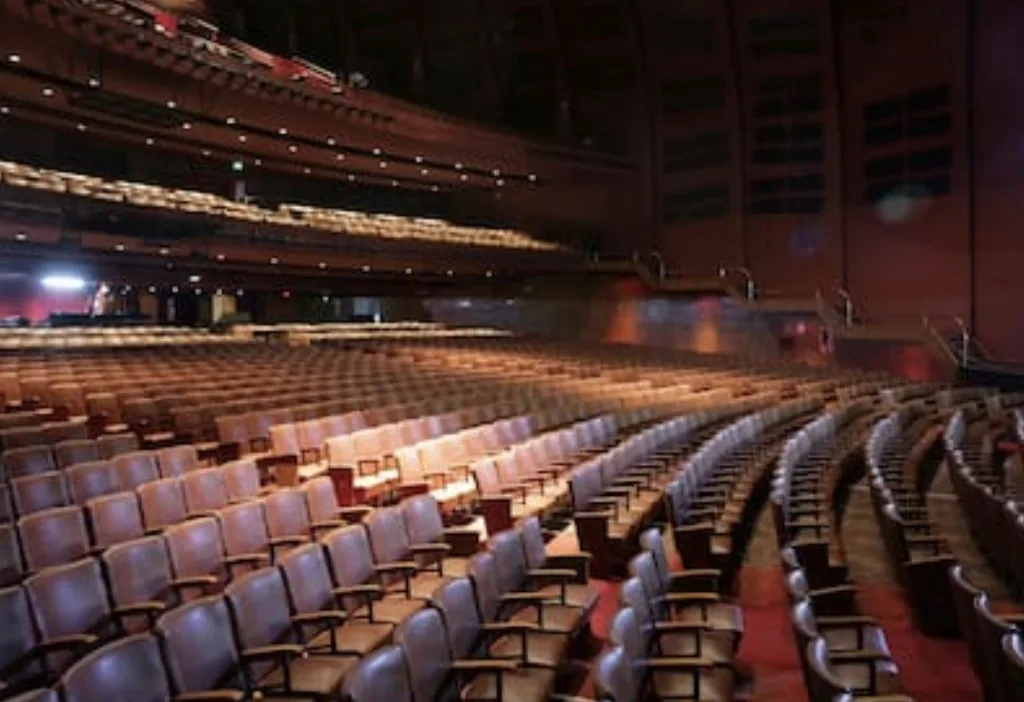
One of Buenos Aires’ great architectural and cultural icons, located in the heart of the “theater corridor” at 857 Corrientes Avenue, less than 200 meters from the Obelisk.
It opened on July 8, 1937, as the largest movie theater in Argentina at the time. Designed in 1936 by architect Alberto Prebisch—the same architect who designed the Obelisk—along with civil engineer Adolfo T. Moret, it was remarkably built in record time: just seven months. The project was financed by Spanish businessmen Ricardo and Francisco López, who sought to replicate the splendor of the great American movie theaters.
It is a jewel of Argentine rationalism, with an interior clearly inspired by New York’s Radio City Music Hall: simple geometric lines, Italian Botticcino marble, wood, bronze, and a functionality far ahead of its time—it even had two underground levels with parking for more than 200 cars and a three-story bar. Due to its heritage value, it was declared a protected building by the National Commission of Museums, Monuments and Historical Sites.
With a capacity of approximately 3,262 spectators, it has hosted artists such as B.B. King, Bob Dylan, Duke Ellington, Charly García, Soda Stereo, and Fito Páez, among many others. It remains an essential landmark of Buenos Aires’ theater and music scene.
7. Espaço Unimed, Sao Paulo, Brasil
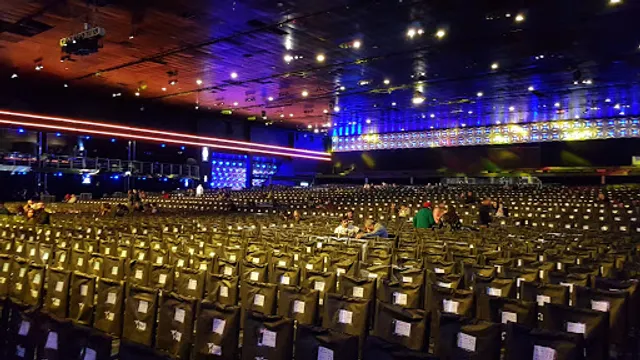
One of São Paulo’s premier entertainment venues, located in the Barra Funda neighborhood in the city’s west zone, near the Barra Funda metro station.
Unlike the theaters mentioned earlier, this one wasn’t originally conceived as such: it opened in 2002 as “Espaço das Américas,” a project of Grupo São Paulo Eventos (the same group behind Villa Country), a company with over 40-50 years of experience in the São Paulo entertainment industry. In 2022, upon its 20th anniversary, the venue changed its name to Espaço Unimed following a naming rights agreement with the health insurance company Unimed.
In 2011, it underwent a major renovation that expanded its capacity to 8,000 people, with a stage designed to offer excellent visibility from any angle. It reopened on December 4, 2012, with a show by “King” Roberto Carlos before 3,000 people, showcasing the new stadium-style seating arrangement.
It boasts a usable area of approximately 3,450-3,500 m², four dressing rooms, two private suites, and capacity for all kinds of events: shows, fairs, conventions, and corporate events. Its stage has hosted over a thousand performances by artists such as Bruce Springsteen, Ed Sheeran, Robert Plant, Morrissey, Ivete Sangalo, Titãs, and Los Hermanos, among many others—totaling around 4 million spectators throughout its history.
8. Teatro Colon, Buenos Aires
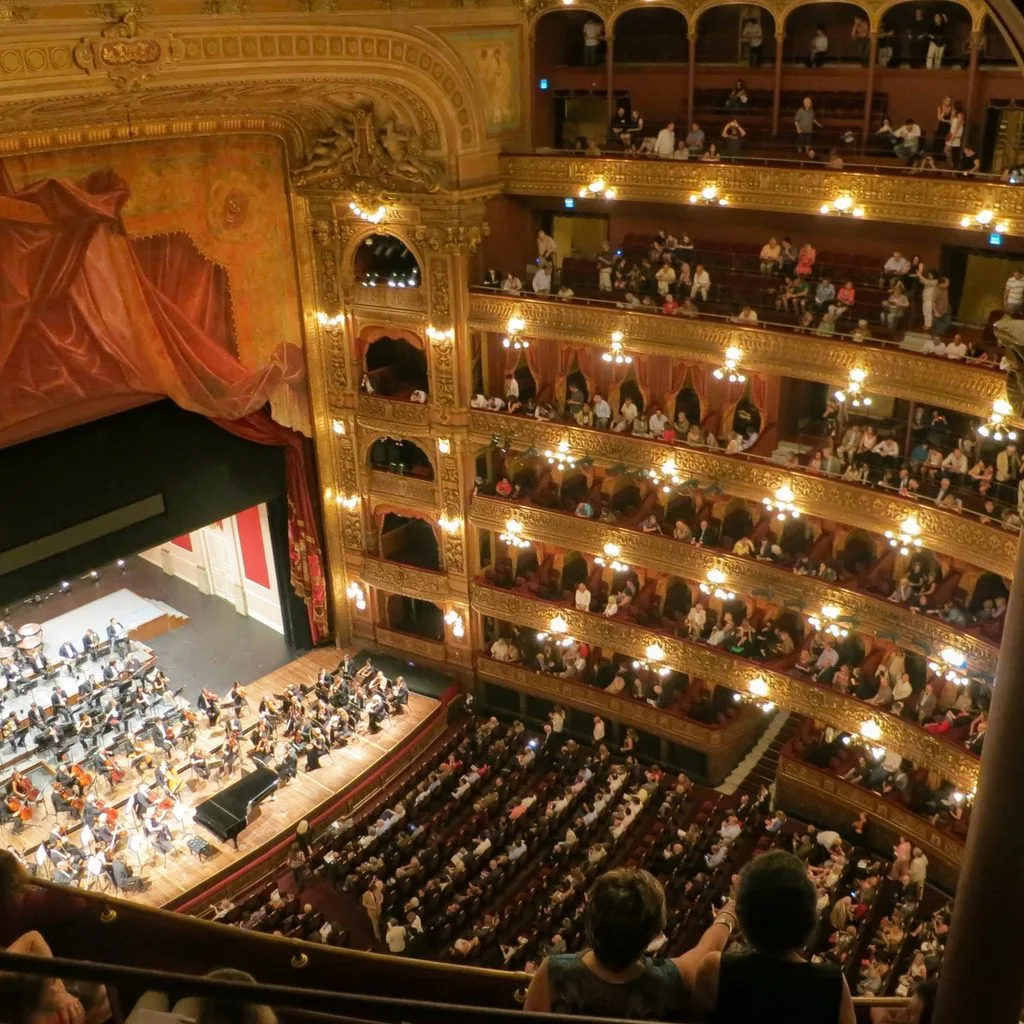
The Teatro Colon in Buenos Aires is one of the most important venues in the world. Its rich and prestigious history and the exceptional acoustic and architectural qualities of its building place it on a par with theaters such as La Scala in Milan, the Paris Opera, the Vienna Opera, London’s Covent Garden, and the Metropolitan Opera in New York.
Throughout its history, no major artist of the last 110 years has failed to grace its stage. Suffice it to mention singers such as Enrico Caruso, Claudia Muzio, Maria Callas, Régine Crespin, Birgit Nilsson, Plácido Domingo, Luciano Pavarotti, dancers such as Vaslav Nijinsky, Margot Fonteyn, Maia Plisetskaia, Rudolf Nureyev, Mikhail Barishnikov, and conductors such as Arturo Toscanini, Herbert von Karajan, Héctor Panizza, Ferdinand Leitner, among dozens of others. It is also common for composers, following the tradition inaugurated by Richard Strauss, Camille Saint-Saëns, Pietro Mascagni, and Ottorino Respighi, to come to the Colón to conduct or supervise the premieres of their own works.
9. Sala Nezahualcóyotl, Mexico City
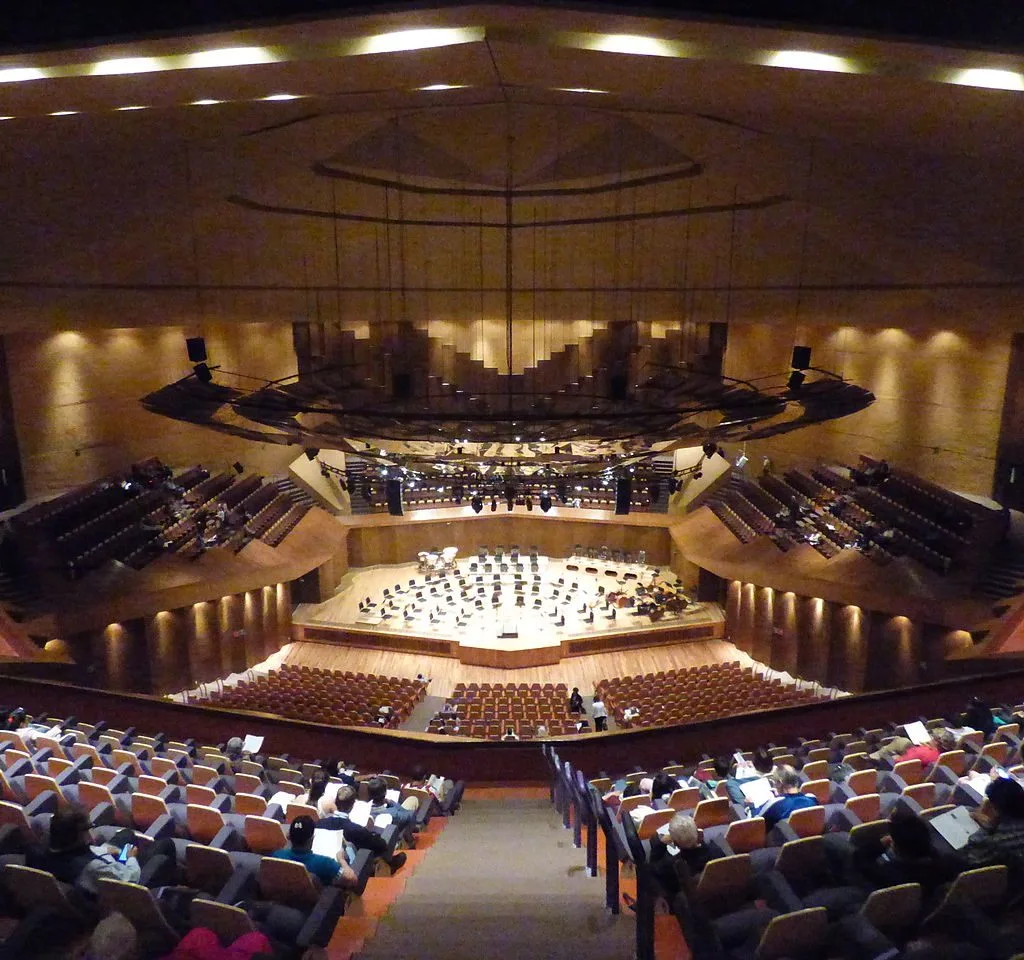
The Nezahualcóyotl Hall in Mexico City is one of the most important concert venues in Mexico and Latin America.
Capacity: Current official UNAM sources indicate 2,177 spectators; other institutional sources cite figures closer to 2,200–2,300 depending on the configuration.
Design by Orso Núñez and Arcadio Artís, with the collaboration of acoustic specialist Christopher Jaffe.
Its most striking feature is that the audience surrounds the stage, instead of being directly in front of it. The concept is inspired by the Berlin Philharmonic, seeking a closer relationship between musicians and audience. Suspended acoustic panels and other architectural elements are designed to distribute sound throughout the hall.
This is why it has a particularly strong reputation for symphonic music, piano, chamber music, and great soloists. UNAM itself ranks it among the best concert halls in Latin America.
Furthermore, it recently underwent a complete renovation, which included stage lighting, dressing rooms, restrooms, electrical systems, civil protection, drainage, and accessibility, while striving to preserve its original design.
For an artist wanting to put on a high-caliber concert in Mexico City, the Nezahualcóyotl is a very prestigious venue, especially if the show has a strong musical component. For more mainstream Latin pop/rock, there are other venues in Mexico City that might be more commercially suitable.
10. Teatro Mayor Julio Mario Santo Domingo, Bogota, Colombia
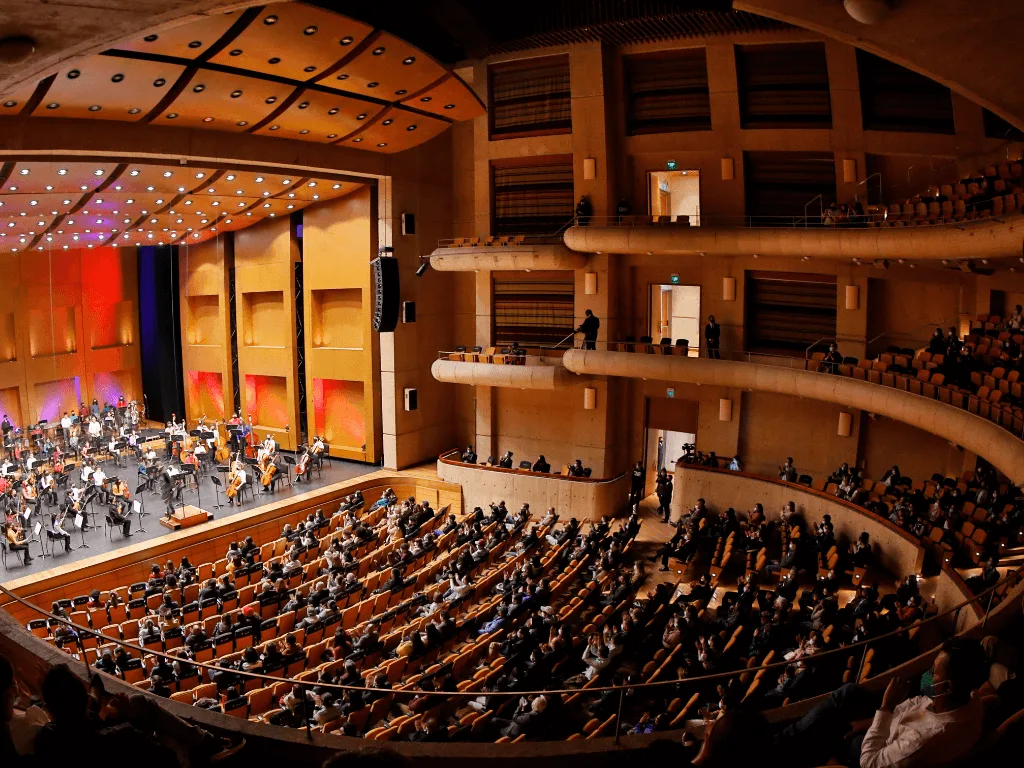
Teatro Mayor and Teatro Estudio are part of the Julio Mario Santo Domingo Cultural Center and Public Library, a public infrastructure donated by the Santo Domingo family to the Capital District of Bogotá.
Both theaters are also part of the Bogotá stage network whose administration is in charge of IDARTES (Distrital Institute of Arts), an entity attached to the city’s Ministry of Culture, Recreation and Sports.
The project started with the visit of Patricia Castaño, director at BiblioAmigos; Julio Mario Santo Domingo; his wife, Beatrice Santo Domingo; his son, Alejandro Santo Domingo and former Mayor of Bogotá, Enrique Peñalosa to the other three Mega Bibliotecas –Great Libraries– of the city. During this visit, Peñalosa talked with Julio Mario Santo Domingo about the imminent need to build a fourth Great Library in Suba, a district located up north of Bogota, and about their lack of resources to get the project going.
The first turn the project took towards what we have today was when Mrs. Beatrice Santo Domingo suggested to consider including the construction of a theater within the donation, since eventually this theater was going to be built in the Suba area as well. Given this suggestion, Doña Beatrice asked Daniel Bermúdez, the architect, to study this possibility. The idea was to include a theater that would serve world-class performances, including opera. With the addition of the theater, the library was transformed into a Cultural Center.