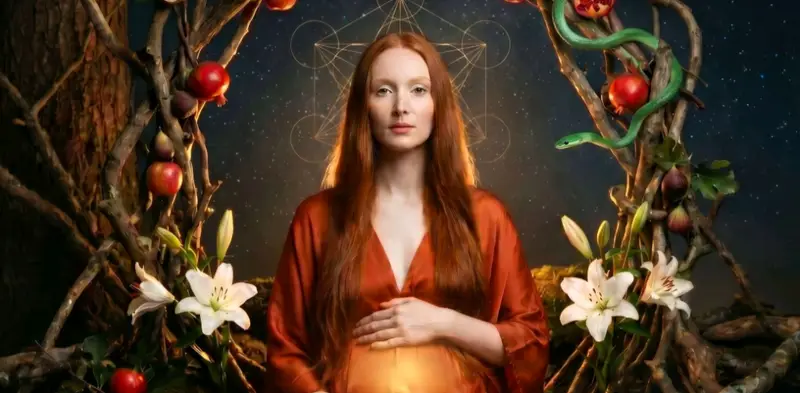

The musical work, inspired by the study of the Torá and Kabbalistic tradition, invites the world to reread ancient texts with fresh eyes.
“I didn’t write “Eve’s Psalm” to change the way people see Eve. I wrote it to inspire people to reopen ancient texts and discover that perhaps they still have much to teach us.”
An inherited story, never fully read. For thousands of years, we have inherited stories. We have repeated them. We have taught them. We have turned them into doctrine. But very rarely have we stopped to ask ourselves: what if we still haven’t fully understood what those texts were trying to say?
With “Eve’s Psalm,” Dominique Maharaj doesn’t seek to rewrite the story of Eve. He seeks to open a much deeper conversation. Inspired by years of studying the Torá, Hebrew gematria, and Kabbalistic tradition, the song was born from a question that transformed her way of reading the Scriptures.
“The work imagines an intimate dialogue between Eve and God, not to change the biblical narrative, but to explore a possibility studied for centuries within the Jewish mystical tradition.”
This song was never just about Eve. “While studying the Torá, I discovered something that changed my understanding of the Scriptures. I realized that Kabbalah doesn’t try to replace the text. It tries to teach us to read it with a different depth. I felt the need to write a song that would plant a question, not an answer. I don’t want to convince anyone to think like me.
What I want is to awaken enough curiosity for each person to open the Torá and investigate for themselves and discover that perhaps there is an entire universe hidden within its letters.”

Within Kabbalistic study, there are surprising connections between Hebrew words. One of the best-known connections is that Nachash (serpent) and Mashiach (Messiah) share the exact same numerical value in gematria: 358. For many Kabbalah teachers, this relationship symbolizes that what appears to represent darkness can also contain the potential to lead to transformation.
“Eve’s Psalm” does not intend to tell the public what to believe. It does not attempt to challenge any religion. It does not seek to create a new doctrine. Its purpose is much simpler—and at the same time much more ambitious: to awaken the desire to study again. To ask questions again. To read again.
To discover that texts written thousands of years ago can still contain ideas capable of engaging with philosophy, psychology, human consciousness, and even some of the great questions that science poses today.
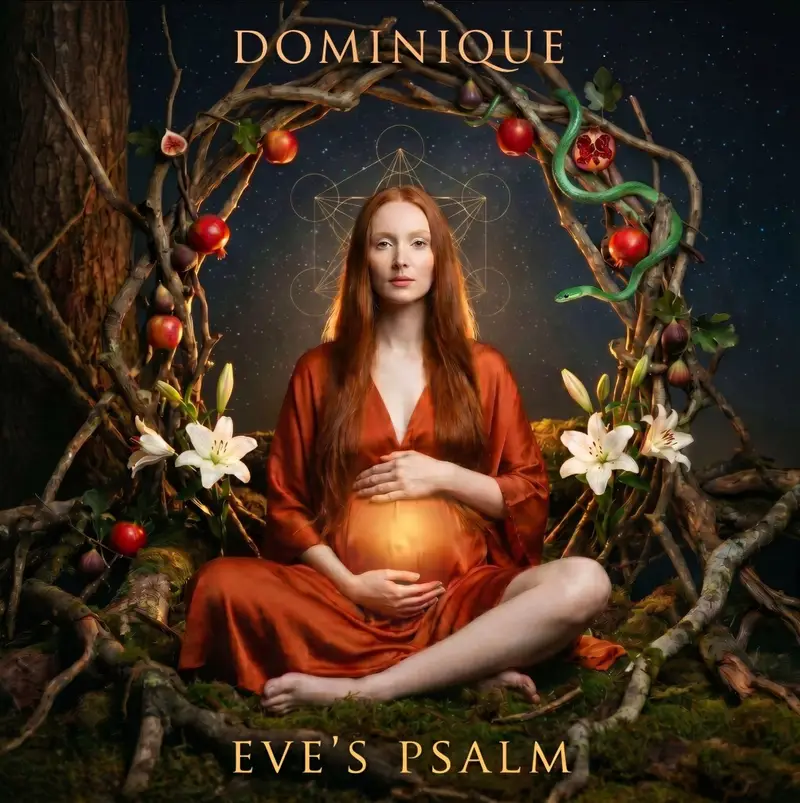
About Dominique Maharaj
Independent researcher of the Torá, Hebrew gematria, and Kabbalistic tradition. Her artistic work stems from the convergence of music, symbolism, ancient history, and the search for the profound meaning of Scripture. Through “Eve’s Psalm,” she proposes a work that uses art as an invitation to reflection and study, hoping to inspire people to explore the richness of ancient texts for themselves.