
The experience of music on a CD, streaming, on the radio, or in a stadium is remarkably different from what you might experience in a theater or in an intimate venue. It’s a difficult experience to describe, and the effect these experiences have on the audience is forever etched in the memory.
Architecture, acoustics, engineering, theater design, and the artists themselves have come together to create true works of art in the live music industry that have allowed us to appreciate music in all its splendor. The audience and tastes of fans are so diverse that the sky’s the limit.
Unlike any other type of venue, you can enjoy the art of music in all its splendor and intimacy. Forget long lines to get in, forget monstrous logistics, and inconveniences. Enjoy a good bathroom, secure, covered parking, and also access to a good restaurant and a drink in an exciting bar. These are the advantages of a theater, and if you’re a lover of Latin music, rock, folk, opera, chamber music, and symphony, then you’ve come to the right place: Theaters are the best alternative.
In Latin America, there are numerous concert halls created with their own unique personality. The greatest exponents of world music have graced their stages, and that’s why we’ve created this list of the ten most impressive theaters in the region for 2025. This year’s list includes legendary theaters and new projects that are packed with music lovers looking to enjoy their atmospheres on a level far superior to that of a huge stadium.
The 10 best theaters and concert halls in Latin America 2025:
1. Teatro Colon, Buenos Aires
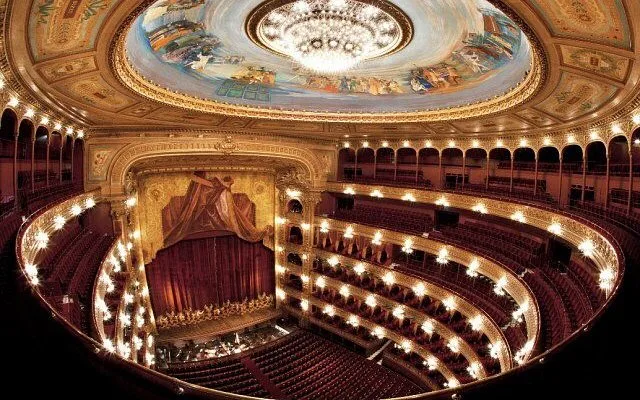
The Teatro Colon in Buenos Aires is one of the most important venues in the world. Its rich and prestigious history and the exceptional acoustic and architectural qualities of its building place it on a par with theaters such as La Scala in Milan, the Paris Opera, the Vienna Opera, London’s Covent Garden, and the Metropolitan Opera in New York.
Throughout its history, no major artist of the last 110 years has failed to grace its stage. Suffice it to mention singers such as Enrico Caruso, Claudia Muzio, Maria Callas, Régine Crespin, Birgit Nilsson, Plácido Domingo, Luciano Pavarotti, dancers such as Vaslav Nijinsky, Margot Fonteyn, Maia Plisetskaia, Rudolf Nureyev, Mikhail Barishnikov, and conductors such as Arturo Toscanini, Herbert von Karajan, Héctor Panizza, Ferdinand Leitner, among dozens of others. It is also common for composers, following the tradition inaugurated by Richard Strauss, Camille Saint-Saëns, Pietro Mascagni, and Ottorino Respighi, to come to the Colón to conduct or supervise the premieres of their own works.
2. Sala Nezahualcóyotl, Mexico City
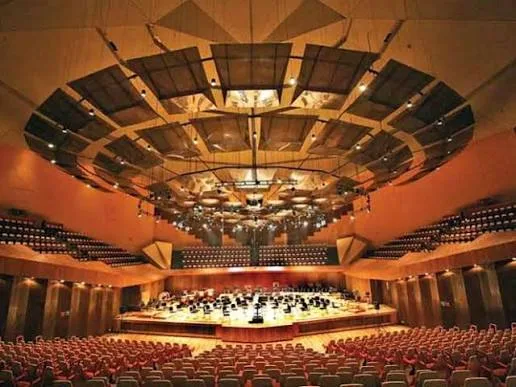
Located in the University Cultural Center, it was inaugurated on December 30, 1976. It houses the Philharmonic Orchestra of the Autonomous University of Mexico and has a capacity for 2,017 spectators. Its magic lies in its acoustics. Its design is considered round due to its interior shape, where the orchestra is slightly forward of the audience. However, there is no visual separation between the musicians and the audience, which focuses the eye on the orchestra. It is inspired by the design of the Berlin Philharmonic and the acoustics of the Amsterdam Concertgebouw.
3. USC Arena, Cali, Colombia
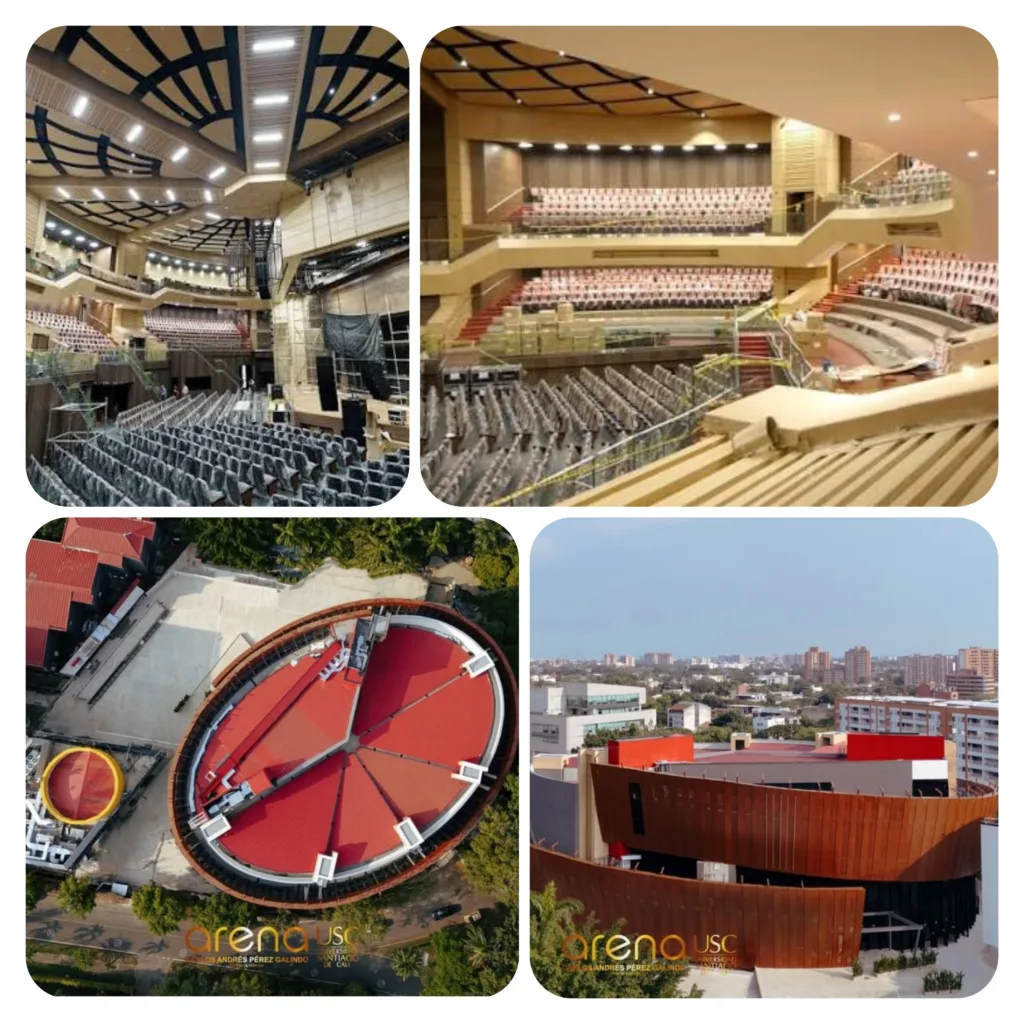
With a capacity for more than 2,200 people, 800 covered parking spaces, and a strategic location, this venue combines cutting-edge technology with accessibility. The lighting and sound system, cinema-style seating, and impressive air conditioning complete the ideal setting for all types of events.
This year, the venue will be one of the key venues for the world-famous Cali Fair. According to its executive director, Carlos Fernández, it will feature some of the world’s most important salsa artists.
The USC Arena also has a bar, restaurant, outdoor areas for relaxing before and during events, and elevators to the dressing rooms. It was inaugurated in December 2024.
4. Teatro Municipal do Rio de Janeiro
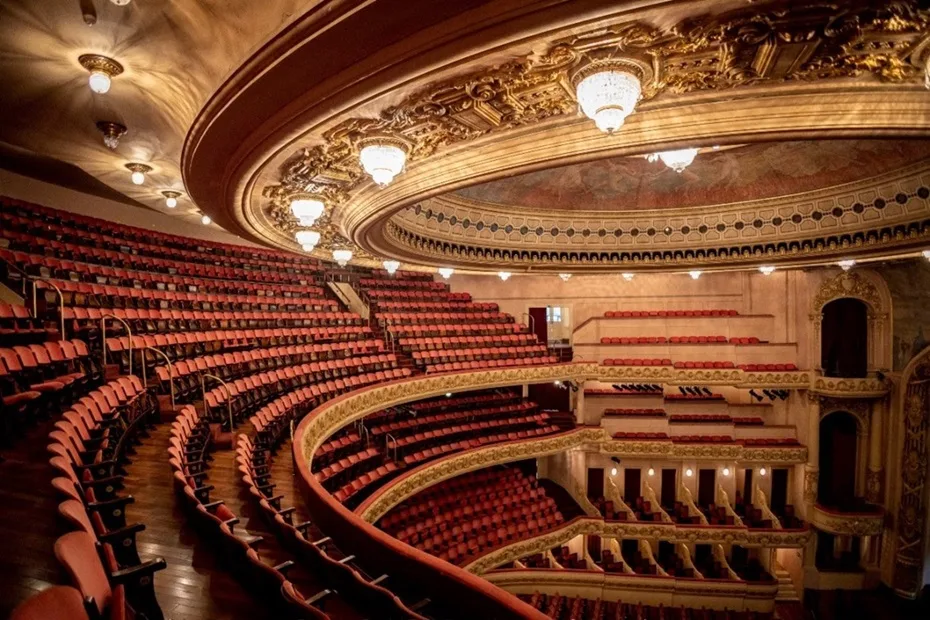
Opened in 1909, the Theatro Municipal is one of the leading performance venues in Brazil and Latin America. It recently underwent extensive renovations, where precious artifacts, such as a large original painting by Italian artist Eliseu Visconti, were rescued. Important areas of the theater have been restored, with particular emphasis on the imposing 350 kg eagle that adorns the top of the building.
Over just over a century of history, the Theatro Municipal has hosted major international artists and important figures in Brazilian culture, including representatives of dance, music, opera, and performing arts. The project that preceded the construction of the Theatro Municipal was created from the combination of the architectural projects of Francisco de Oliveira Passos and Frenchman Albert Guilbert, who were tied in the competition to create the new theater’s design. The design was inspired by the Paris Opera. Since the 1930s, the Municipal Theater of Rio de Janeiro has been committed to maintaining its own artistic corps. Today, it is the only Brazilian cultural institution that simultaneously maintains a choir, a symphony orchestra, and a ballet company.
5. Teatro Nacional Rubén Darío Managua, Nicaragua
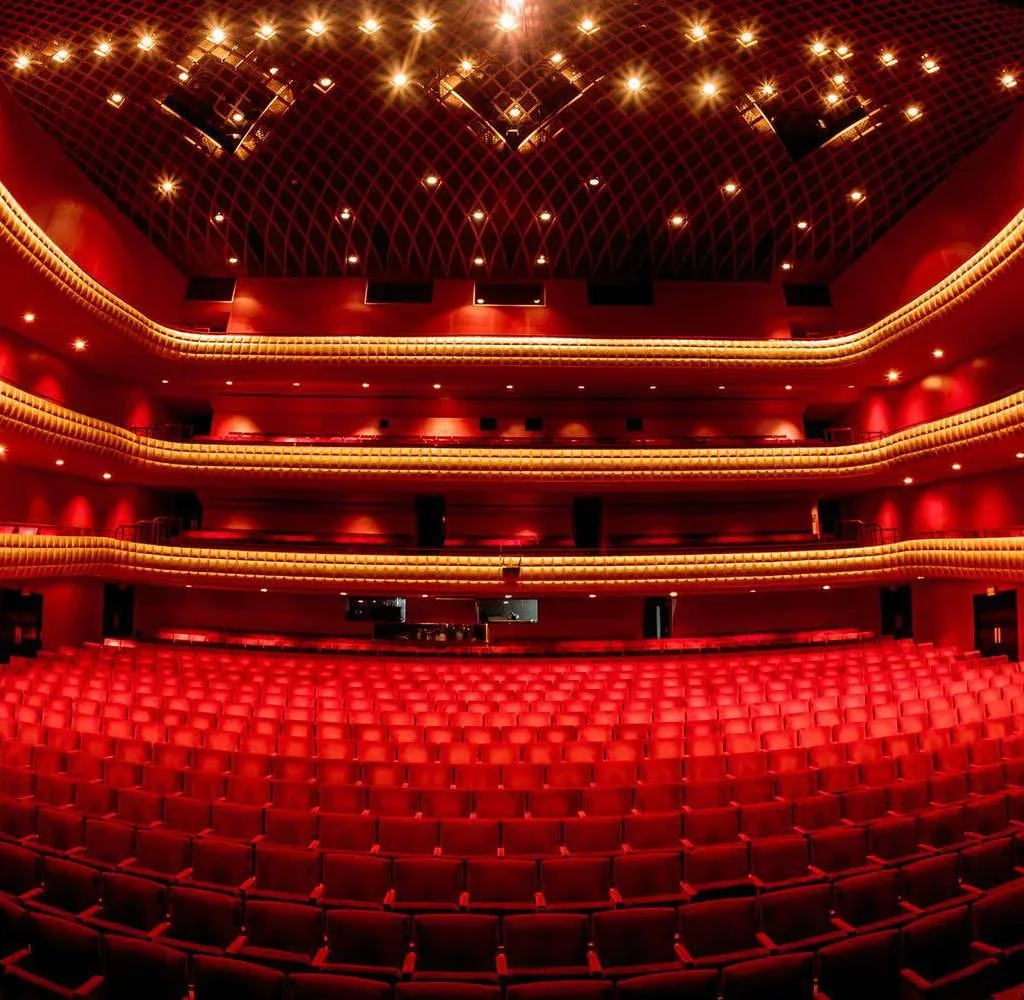
Known as the Temple of Nicaraguan Art and Culture, the Rubén Darío National Theater’s planning began in 1964, when a group of people associated with the Rubén Darío Pro Arte Institute became interested in Nicaragua having a building dedicated to the arts in memory of Rubén Darío, whose centennial birth would be celebrated in January 1967. In the Inauguration Ceremony on December 6, 1969, this Institute presented the building to the Nicaraguan State.
In April 1970, by presidential decree, the Theater was formalized as a semi-autonomous institution attached to the Ministry of Public Education. It is an emblematic heritage of old Managua that survived the 1972 earthquake.
Music, drama, opera, and ballet can be presented on the flexible stage. The large foyers, dressing rooms, and offices complement its functions when it is used for civic and cultural gatherings, including major international conventions.
In its nearly four decades of cultural offerings, the various performing spaces of the Rubén Darío National Theater have witnessed the success of the greatest stars of international entertainment.
Its rich and varied programming continues to meet the demands of modern times, both from an artistic perspective and in terms of installed technical capacity.
6. Teatro Amazonas, Manaus, Brazil
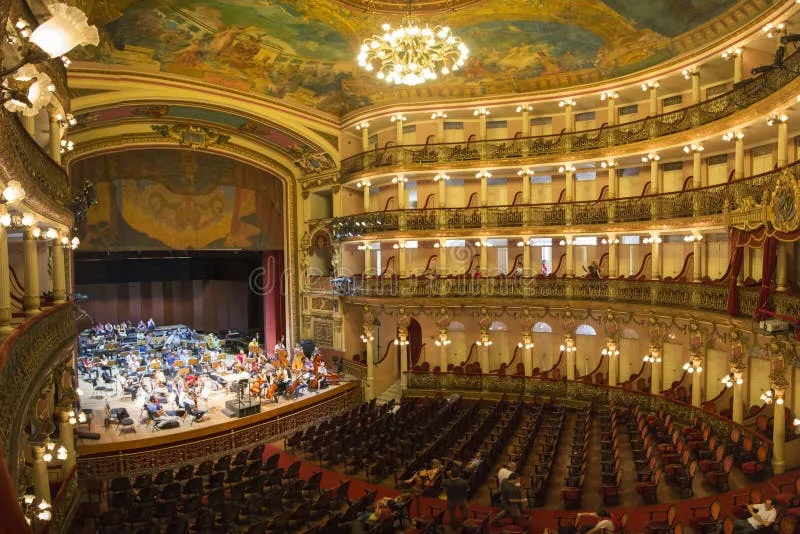
With its Renaissance-style exterior and unique details on its dome, the theater has become one of Brazil’s most famous monuments, and consequently, Manaus’ greatest cultural symbol. It is one of the architectural expressions responsible for the city’s reputation as the Paris of the Tropics.
As a unique work in the country and representing Manaus’s heyday during the Rubber Rush, it was declared a National Historic Heritage Site by IPHAN (National Institute of Historic and Artistic Heritage) in 1966.
With its very noble decor, the Teatro Amazonas has hosted not only major theatrical productions but also international shows such as that of the American band The White Stripes. Since 1997, the Amazonas Opera Festival has been held at the theater. In 2008, the theater was chosen as one of the seven wonders of Brazil in two competitions sponsored by Caras Magazine in collaboration with HSBC Bank and another by the Goff design studio.
7. Teatro Municipal Santiago, Santiago de Chile, Chile
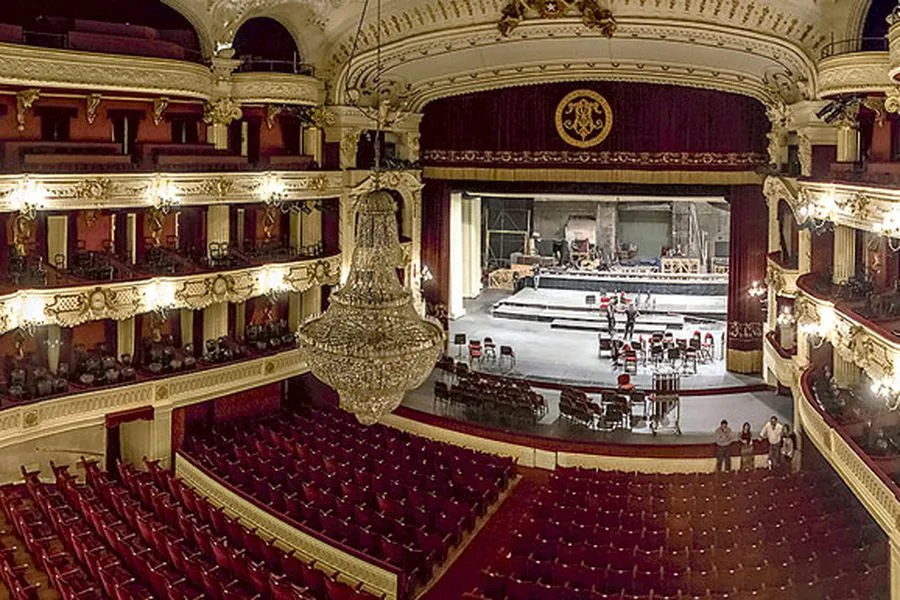
The Santiago Municipal Theater is the oldest and longest-running cultural center in Chile, dedicated to the dissemination and promotion of artistic culture nationally and internationally. It houses national artistic ensembles such as the Santiago Philharmonic Orchestra, the Santiago Ballet, and the Municipal Choir, offering seasons of opera, dance, and symphonic and chamber concerts. The building, declared a National Historic Monument, is also a development space for children and young people through its ballet school.
Currently, the Santiago Municipal Theater is managed by the Santiago Cultural Corporation.
In addition to being a true performance center, the Santiago Municipal Theater is a reflection of Chile’s republican, political, social, and cultural tradition.
8. Palacio Bellas Artes, Mexico City, Mexico
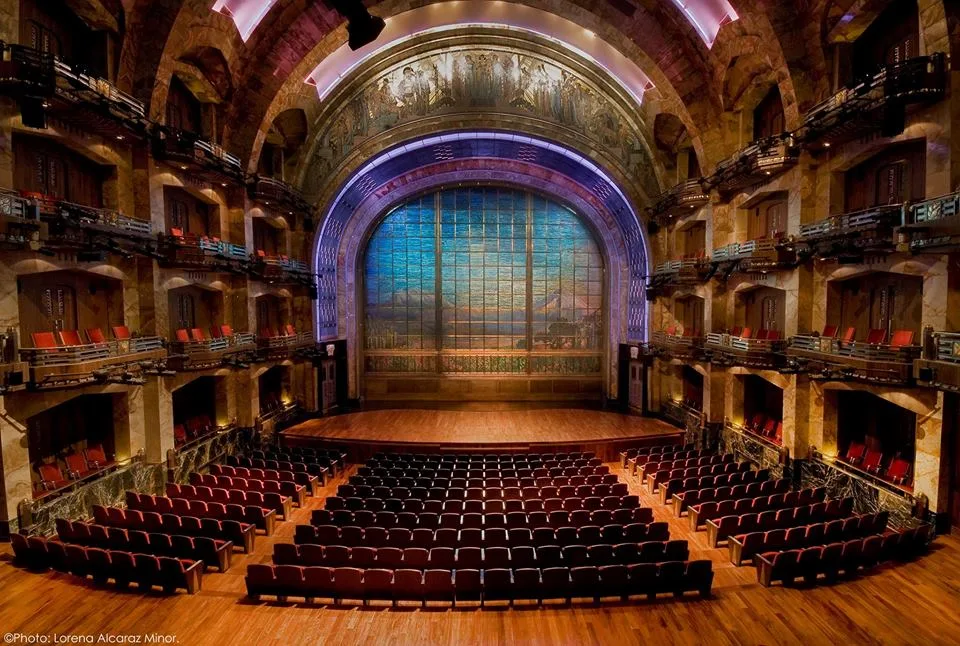
The Palacio de Bellas Artes Theater is an important venue in Mexico City, home to the country’s opera, dance, and music festivals, and is world-renowned for its majesty and unique glass curtain. The hall, with a capacity of 1,396, has hosted performances by Mexican and international artists and is considered a crucial forum for Mexican artistic expression.
Glass Curtain: One of its attractions is the Luis Tiffany glass curtain, which represents the Popocatépetl and Iztaccíhuatl volcanoes.
Acoustics: The hall is renowned for its perfect acoustics, making it ideal for a wide range of performances.
Capacity: It has a capacity for 1,396 spectators.
It hosts important artistic groups such as the National Symphony Orchestra and the National Opera Company.
9. Teatro Mayor Julio Mario Santo Domingo, Bogota, Colombia
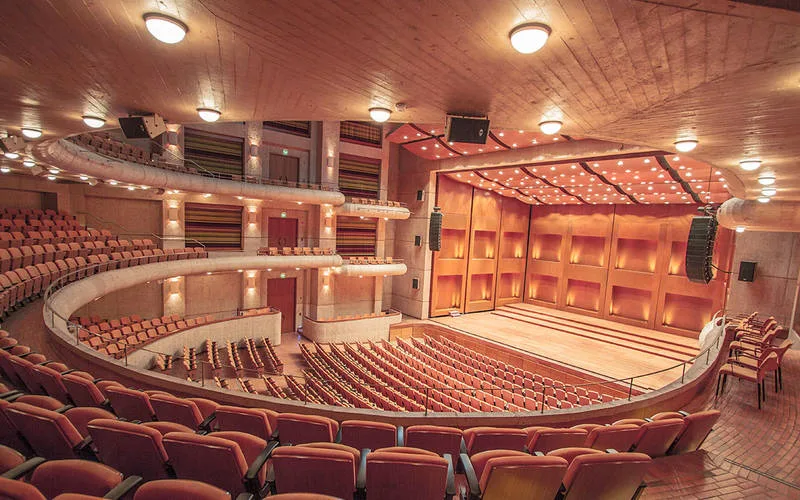
Teatro Mayor and Teatro Estudio are part of the Julio Mario Santo Domingo Cultural Center and Public Library, a public infrastructure donated by the Santo Domingo family to the Capital District of Bogotá.
Both theaters are also part of the Bogotá stage network whose administration is in charge of IDARTES (Distrital Institute of Arts), an entity attached to the city’s Ministry of Culture, Recreation and Sports.
The project started with the visit of Patricia Castaño, director at BiblioAmigos; Julio Mario Santo Domingo; his wife, Beatrice Santo Domingo; his son, Alejandro Santo Domingo and former Mayor of Bogotá, Enrique Peñalosa to the other three Mega Bibliotecas –Great Libraries– of the city. During this visit, Peñalosa talked with Julio Mario Santo Domingo about the imminent need to build a fourth Great Library in Suba, a district located up north of Bogota, and about their lack of resources to get the project going.
The first turn the project took towards what we have today was when Mrs. Beatrice Santo Domingo suggested to consider including the construction of a theater within the donation, since eventually this theater was going to be built in the Suba area as well. Given this suggestion, Doña Beatrice asked Daniel Bermúdez, the architect, to study this possibility. The idea was to include a theater that would serve world-class performances, including opera. With the addition of the theater, the library was transformed into a Cultural Center.
10. Teatro Solis, Montevideo, Uruguay
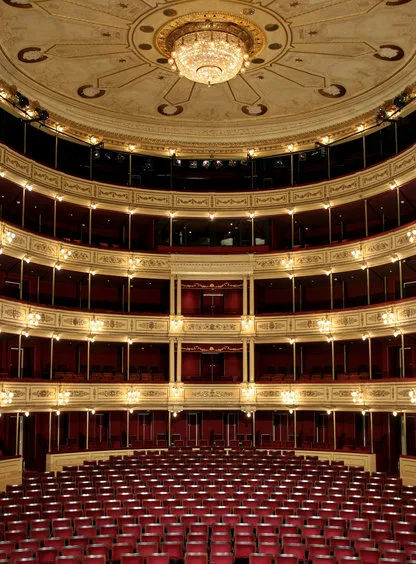
This is the oldest theater in South America and one of the most important venues in the country, with a capacity for 1,500 spectators in its main hall.
When it came to naming it, several names were proposed: Theater of Business, of Peace, of the Sun, of Concord, of Harmony, of Constancy, of May, of Liberty, of Artigas, Republican, Montevideo, and Oriental. However, the board of directors approved by majority vote the Solís Theater, in memory and commemoration of the navigator Juan Díaz de Solís, the first European explorer to reach the Río de la Plata.
It is located in the Ciudad Vieja neighborhood and its main entrance is on the corner of Buenos Aires Street and Bartolomé Mitre Street.
The Solís’s main façade bears similarities to that of Genoa’s Teatro Carlo Felice. The auditorium is slightly elliptical, like that of Milan’s La Scala Theatre. However, the Solís’s interior bears a notable resemblance to another Italian theater, the Metastasio Theater in Prato, near Florence.
The final stage of the theater’s restoration (2003-2004), which consisted of opening the main auditorium (central shaft), part of the side auditoriums, and modifying the stage equipment and technology, was carried out by architect Eneida de León.