Special Coverage: I Color Radio U.S.
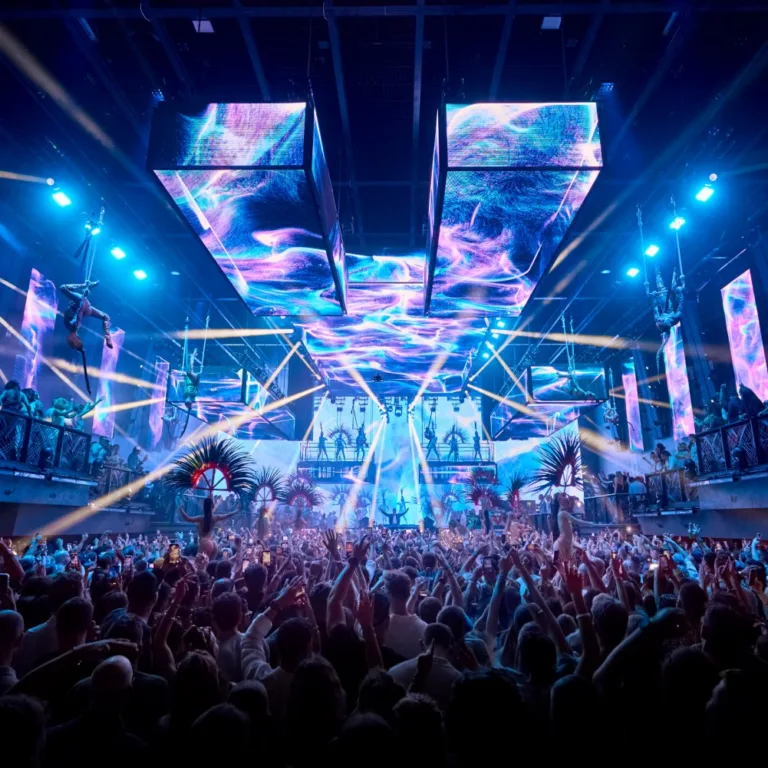
The countdown has entered its final phase. On July 26th, the Monegros Desert will once again become the epicenter of a phenomenon that transcends mere musical celebration. For 22 uninterrupted hours, the 32nd edition of the Monegros Desert Festival will emerge as one of Europe’s most powerful electronic music experiences, bringing together more than 50,000 souls in one of the country’s most extreme and fascinating environments, where heat, dust, and music take center stage.
The unmistakable sound of the desert
This year’s lineup not only consolidates Monegros’ identity but also embodies its most diverse and challenging spirit. In a landscape where techno has reigned since its inception, essential figures who have forged its legend return, such as Charlotte de Witte, Richie Hawtin, and Chris Liebing. Accompanying them are sonic offerings that boldly expand the musical spectrum, incorporating the power of drum & bass, the magnetism of house, and the enveloping depth of dub.

Among the most anticipated live performances, the electrifying energy of Pendulum, the rhythmic sophistication of Rudimental, and the ancestral vibe of Protoje promise to inject a new dimension into the program, transcending the traditional DJ set format. Names like Adam Beyer, Paco Osuna, Anetha, I Hate Models, and Fatima Hajji complete a lineup that fuses world-renowned influences with more disruptive sounds and emerging projects. “Monegros has always been a place for the unexpected,” notes Joaquín Cabos, festival director. “We don’t just program sets; we design a journey. There’s noise, there’s sweat, but also moments of beauty and pause. The important thing is that people feel like they’re experiencing something real.”
Designed for the body, designed for the experience
If anything has characterized the evolution of Monegros in recent years, it’s the meticulous attention to audience comfort, without sacrificing its radical essence. For this 2025 edition, the venue incorporates innovative shaded and natural rest areas, vital in the desert ecosystem. The water points have been substantially expanded, ensuring constant and accessible hydration. The signage network is now clearer and more efficient, improving orientation in such a large space. Significant sanitary improvements and a fully digitalized cloakroom system have also been implemented, all with the aim of making the experience more fluid and livable, without sacrificing the extreme character that defines the festival.

In addition, medical assistance has been reinforced to ensure a rapid and effective response, and the presence of spaces dedicated to disconnecting or exploring more intimate musical offerings has been increased. “We want people to be able to give their all, but also feel cared for,” explains Cabos. “We’ve worked to make the environment more friendly without sacrificing the unique experience we offer.”
Arriving in the Monegros Desert
Accessibility to Monegros has been carefully optimized to facilitate the arrival of the thousands of attendees. The organization strongly recommends using the official bus service, considering it the most sustainable and direct option to reach the heart of the festival. For those who opt for a private vehicle, clearly marked parking areas have been provided, ensuring an orderly flow of entry and exit. All detailed logistical information is now available on the festival’s official website, allowing attendees to plan their trip in advance.

Beyond Music: Commitment and Awareness for the Desert
The festival remains firmly committed to moving toward a more conscious and sustainable model. Far from grand slogans, the Monegros Desert Festival materializes this vision through concrete actions.
Among its notable initiatives, the festival has opted for the use of 100% renewable biofuel to power its machinery and generators. Furthermore, unused infrastructure and materials (including an airplane and a train) have been repurposed, giving them a second life in the desert.
At the same time, public transportation is actively promoted through official bus lines that connect the desert with various cities. The incorporation of recycled materials into merchandising and a local, plant-based cuisine served with compostable tableware reinforce this philosophy.
All of this converges toward a clear objective: to minimize the environmental impact without compromising the intensity and quality of the festival experience.
A date with the living history of electronic music
Monegros is not just another festival; it is a cultural phenomenon that has managed to withstand passing fads, crises, and pandemics.